How do I choose safe, non-toxic baby products when the labels all say the same thing?
"Non-toxic," "clean," "natural" and "gentle" have no legal definition on a baby product label in the United States, so the ingredient list is the part to read. Four checks cover most of it: every ingredient listed in full, the word "fragrance" or "parfum" absent, since it can stand for a mix of undisclosed ingredients, a short list where each ingredient has a stated job, and named tests, such as a repeat insult patch test or ophthalmologist testing, with the testing body named. Independent ratings such as the EWG Skin Deep database are a starting point for reading an ingredient, and a published standard from the maker that says what is excluded and why is a stronger signal than a badge. Baby skin is often called sensitive; it is fragile, thinner and still building its barrier, which is why fewer variables matter more than a longer promise. A label that lets you check its claims is the one to trust.

Every article in this guide




Who it's for: the label reader who wants to try before committing.
Try the standard with the Discovery Set
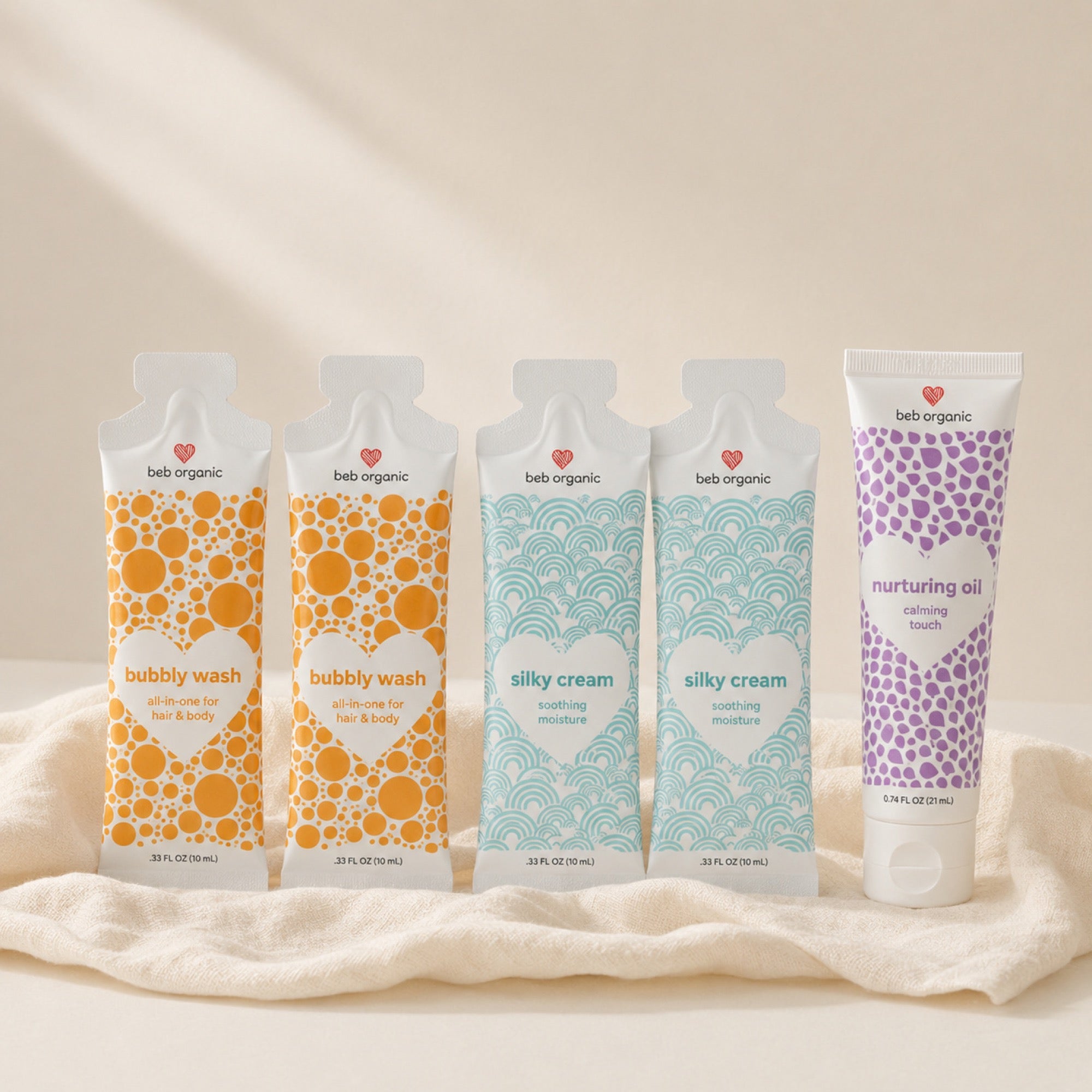
The Discovery Set includes BEB Bubbly Wash, Silky Cream and Nurturing Oil in minis with $20 in gift certificates for the full sizes, each one fragrance-free with every ingredient explained on the ingredients page. Read the full list first; it is written to be checked.

Questions parents ask
What does non-toxic mean on a baby product?
Non-toxic has no legal definition on a cosmetic label in the United States, so it tells you how the maker chose to describe the product and nothing about its testing. The same is true of clean and natural. The ingredient list and the named tests carry the information.
Why does fragrance-free matter on a baby product?
Fragrance is the most common cause of skin reactions to cosmetics, and a single word, fragrance or parfum, can stand for dozens of undisclosed ingredients. A fragrance-free product has no added scent and no masking scent, so the ingredient list names everything that is in it. A faint natural aroma from plant ingredients is different from an added fragrance.
How do I read a baby skincare ingredient list?
Ingredients are listed in descending order by amount, so the first five tell you most of the formula. Look for a short list, botanical names with their common names beside them, and no fragrance line. A maker who explains what each ingredient is for, and how it was prepared, has shown their work.
Are EWG ratings a good way to choose baby products?
EWG Skin Deep ratings are a useful starting point for reading an individual ingredient, and EWG VERIFIED is a separate, product-level mark the maker applies for. Read a rating beside the ingredient list and the named tests, and use it to ask better questions about a product you are considering.
What tests should a baby product have?
A repeat insult patch test (HRIPT) for irritation and sensitization, run by a third party, is the baseline for a leave-on or rinse-off baby product. A wash that may reach the eyes can also be ophthalmologist tested. Look for the test named on the maker's site, with who ran it, since the phrase clinically tested, standing alone, says little.
What does BEB leave out, and why?
Every BEB product excludes essential oils, synthetic fragrance, synthetic dyes, mineral oil and petrolatum, and sulfates (SLS and SLES), and the line also leaves out parabens, phthalates, phenoxyethanol, formaldehyde-releasers and sodium benzoate. Each exclusion is a formulation choice for fragile skin, and the reason for each is written out on the ingredients page. The organic share is stated per product, with the number.