What is normal for newborn skin in the first weeks, and what care fits?
Newborn skin does a lot in the first six weeks, and most of it is normal: peeling and flaking in the first one to three weeks as the skin meets air, tiny white milia on the nose, a blotchy red rash called erythema toxicum in the first days, baby acne around two to four weeks, and some cradle cap. The care that fits is small: sponge baths until the umbilical cord stump falls off, then a full bath two or three times a week in warm water, a fragrance-free wash used sparingly, a fragrance-free moisturizer where skin looks dry, and warm hands for everything in between. Fewer products with shorter ingredient lists mean fewer variables for skin that is thinner than an adult's and still building its barrier. The signs that need a call are yellow skin that deepens or spreads, a fever in a baby under three months, redness or discharge at the cord, blisters, or a rash with a baby who seems unwell.
Call your pediatrician for yellowing skin or eyes that deepens or spreads past the first days, a temperature of 100.4°F (38°C) or higher in a baby under three months, redness, swelling or discharge around the cord stump, blisters, or any rash with a baby who is unusually sleepy or feeding poorly.
Who it's for: a first routine, before full sizes.
The Discovery Set, the routine in minis
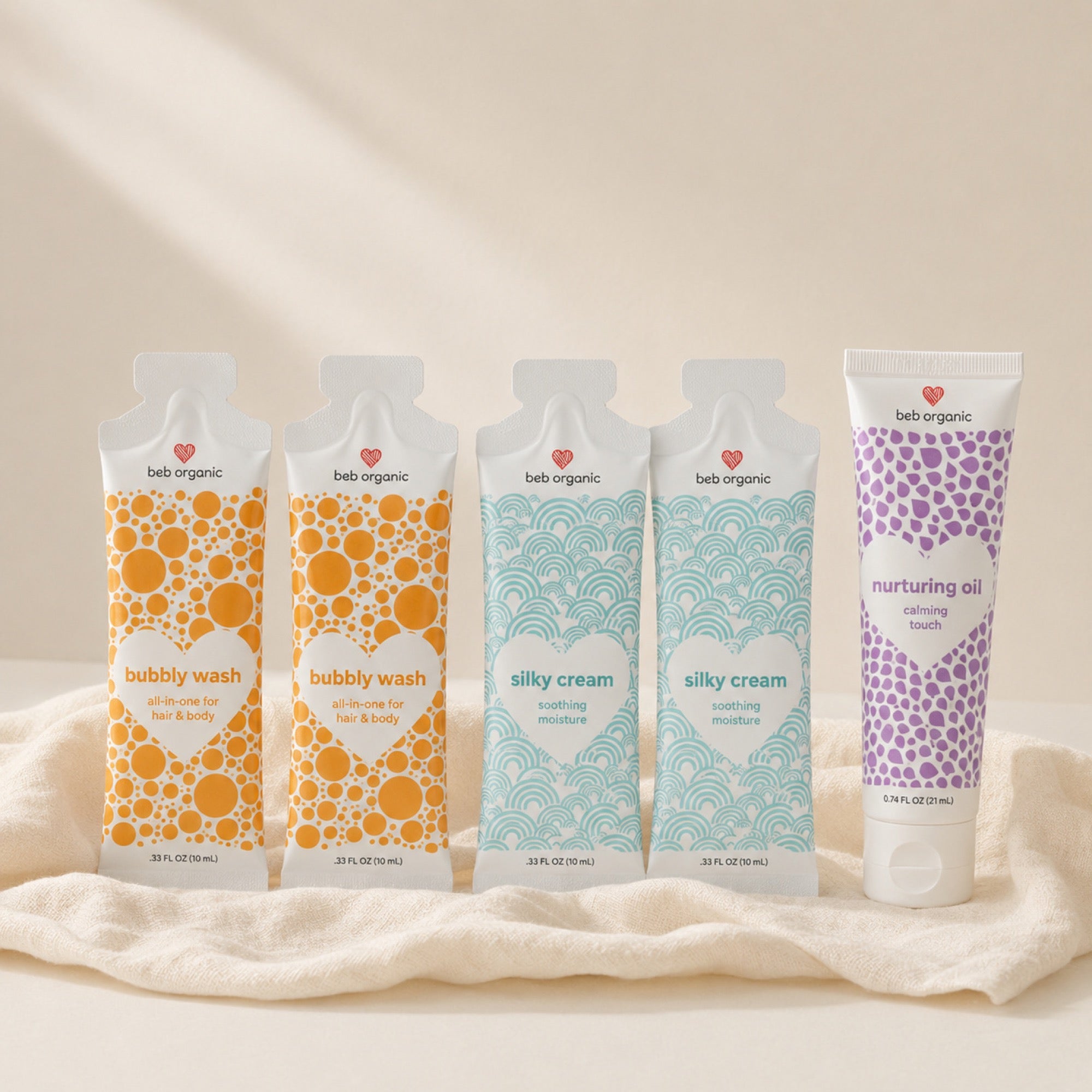
The Discovery Set is the routine in minis, BEB Bubbly Wash, Silky Cream and Nurturing Oil, with $20 in gift certificates for the full sizes. Wash, Hydrate, Seal, Cuddle at its smallest size counts as the whole Steady Hands Routine, and your hands are the part your baby learns from.

Questions parents ask
Why is my newborn's skin peeling?
Newborn peeling is the top layer of skin adjusting to air after months in fluid, and it is normal in the first one to three weeks, especially on the hands, feet and ankles. It needs no product and passes by itself. Babies born after their due date often peel more.
How often should I bathe a newborn?
Two or three baths a week is plenty for a newborn, with a damp cloth for the face, neck folds and diaper area in between. Until the umbilical cord stump falls off, usually in one to three weeks, give sponge baths and keep the stump dry. Keep baths short and the water warm to the touch.
Do newborns need lotion?
Most newborns need no moisturizer in the first weeks. If the skin looks dry or cracked, especially around the ankles and wrists, a fragrance-free moisturizer on those spots after the bath is fine. Fragrance-free and short ingredient lists keep the variables down for skin that is still building its barrier.
What is vernix, and should I wash it off?
Vernix is the white, waxy coating a baby is born with, and it protects the skin in the womb and in the first hours after birth. Most hospitals now leave it to absorb into the skin over the first day, and delaying the first bath is standard practice. Any that remains in the folds can be wiped gently with a damp cloth.
How do I care for the umbilical cord stump?
Keep the stump clean and dry, fold the diaper below it, and let it fall off by itself, usually within one to three weeks. Sponge baths until then, and no ointments or alcohol unless your pediatrician asks for them. Redness spreading onto the belly, swelling, discharge or an odor is a reason to call.
What is the smallest routine that counts for a newborn?
Wash, Hydrate, Seal, Cuddle is the smallest size of the Steady Hands Routine: a bath or a spot-clean two or three times a week, a fragrance-free cream where skin looks dry, a little oil warmed in your palms to seal it in, and the cuddle, which needs no product at all. The full routine adds the Soothe step after the wash. On a two-minute night, warm hands and the cuddle count as the whole routine.