Which baby lotion or moisturizer should I use, and how often?
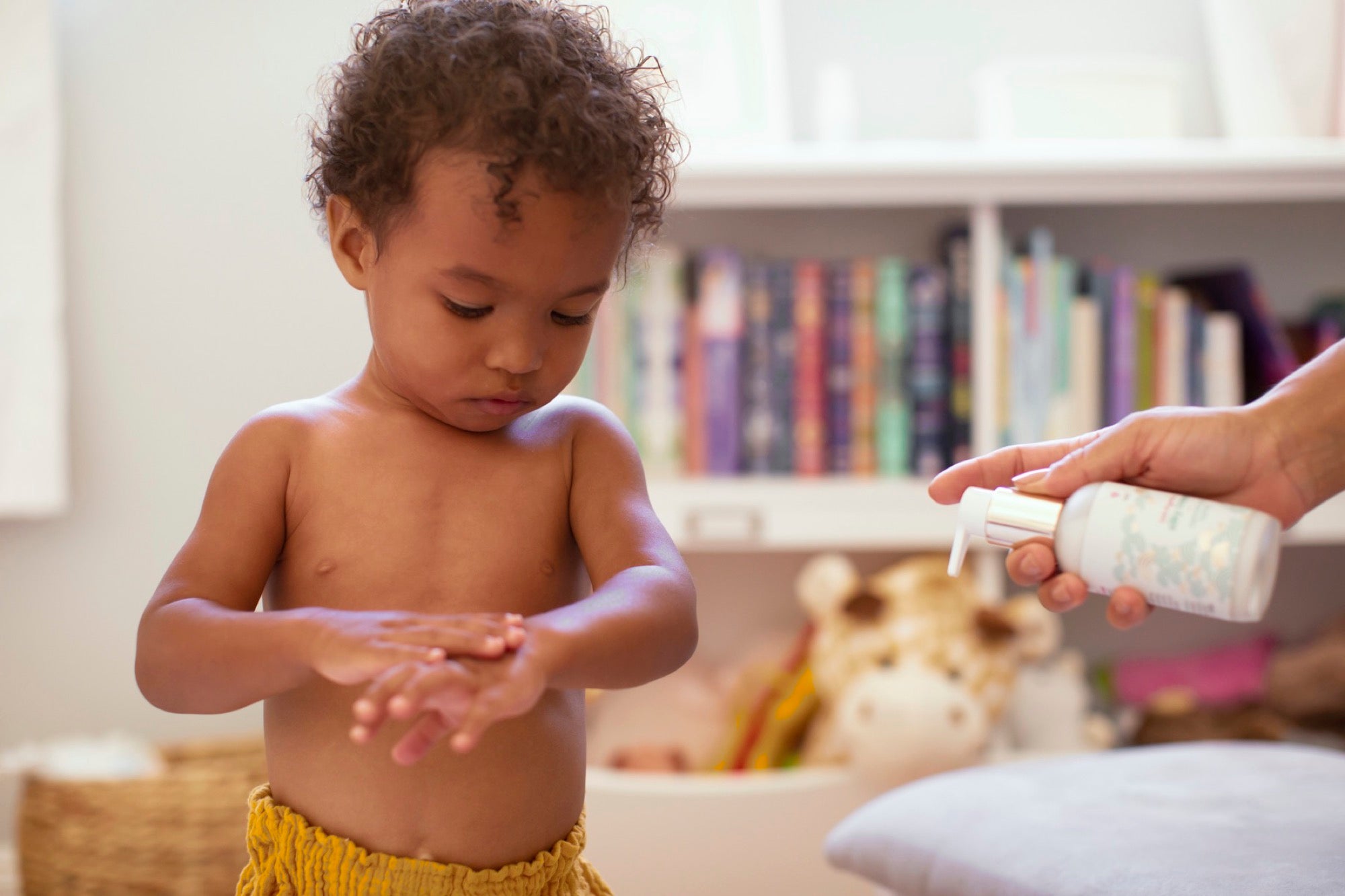
The format matters more than the brand: lotions are mostly water and the lightest option, creams hold more oil and keep moisture in longer, and ointments are the heaviest, so a cream suits most babies with dry-looking skin and a lotion suits skin that is already soft. Apply it within a few minutes of the bath while the skin is still damp, and again whenever skin looks dry, since most baby dryness comes down to how often the skin is moisturized, and to dry indoor air, more than to which product is used. Fragrance-free with a short ingredient list keeps the variables down for skin that is thinner than an adult's and loses water faster. A thin layer of oil over the moisturizer slows evaporation, which is what sealing means. Newborn peeling in the first weeks needs no moisturizer at all and passes by itself.
Founder Q/A - Are BEB Organic Products Just for Babies?
Founder Q/A - How did you come up with the 'baby acne treatment'?
Who it's for: everyday dry-looking skin, the step you repeat most.
Hydrate, then Seal
Silky Cream is the Hydrate step: a fragrance-free cream with shea butter, squalane and rosehip that melts in at the warmth of your hands, helps skin feel moisturized and is kept out of the diaper area. Nurturing Oil is the Seal step over it, a few drops warmed in your palms to seal in moisture.


Questions parents ask
Lotion or cream for a baby?
A cream for dry-looking skin, a lotion for skin that is already soft. Lotions are high in water and the lightest format, which is also why they evaporate fastest; creams hold more oil and keep moisture in longer. Ointments are the heaviest and are usually kept for clinician-directed care.
How often should I moisturize my baby?
At least once a day after the bath, on damp skin, and more often when the air is dry or the skin looks rough: a midday application and one before going outdoors in winter are common additions. More applications of the same product usually help more than a change to a heavier one. Indoor humidity below about 30 percent in heated rooms dries skin faster.
What ingredients should a baby moisturizer have?
A humectant that draws water in, such as glycerin or aloe, an emollient that softens, such as shea butter or squalane, and in a cream a gentle structure such as cetearyl alcohol, a fatty alcohol that is not a drying alcohol. Fragrance-free is the floor. Vitamin E (tocopherol) is a common addition that protects the oils in the formula.
Can I use adult lotion on my baby?
A fragrance-free adult moisturizer with a short ingredient list is often fine on a baby in a pinch, and many share the same base ingredients. The ones to skip are fragranced products and anything with exfoliating acids, retinoids or menthol. A product made for babies has usually been patch tested with that use in mind.
Should I use lotion on a newborn's peeling skin?
Peeling in the first one to three weeks is normal newborn skin adjusting to air and needs no product. It passes by itself. Dry patches that persist past the newborn weeks, or skin that looks rough and dull, are the kind daily hydrating and sealing helps.
Why follow a cream with oil?
A cream puts water and emollients into the skin, and a thin layer of oil on top slows the water from evaporating. In dry air a humectant with no seal on top can give water back to the room, so the second step is what makes the first one hold. Two light steps applied often do more than one heavy step applied once.