What helps baby eczema and dry skin day to day, and what does a clinician handle?
Baby eczema, or atopic dermatitis, is dry, itchy, red patches that flare and calm in cycles, often on the cheeks, scalp and the outer arms and legs in the first year. Everyday care that clinicians agree on is moisturizing at least once a day and within minutes of a short, lukewarm bath, fragrance-free products with short ingredient lists, soft cotton against the skin, and the same routine kept through calm stretches and flares alike. Dryness without eczema is usually about how often the skin is moisturized and how dry the room is, so adding applications comes before changing products. Diagnosis, severity and the treatment plan, which often includes a prescription cream for flares, belong with a pediatrician or pediatric dermatologist, and moisturizing continues alongside whatever that plan includes. Daily moisturizing has not been shown to prevent eczema, so a routine is daily care for the skin a baby has.
See your pediatrician or a pediatric dermatologist for a diagnosis, and sooner if patches are weeping, cracked, crusted or look infected, if itching is costing your baby sleep, or if gentle daily care has not settled the skin in a couple of weeks.

Baby Skin Allergies 101
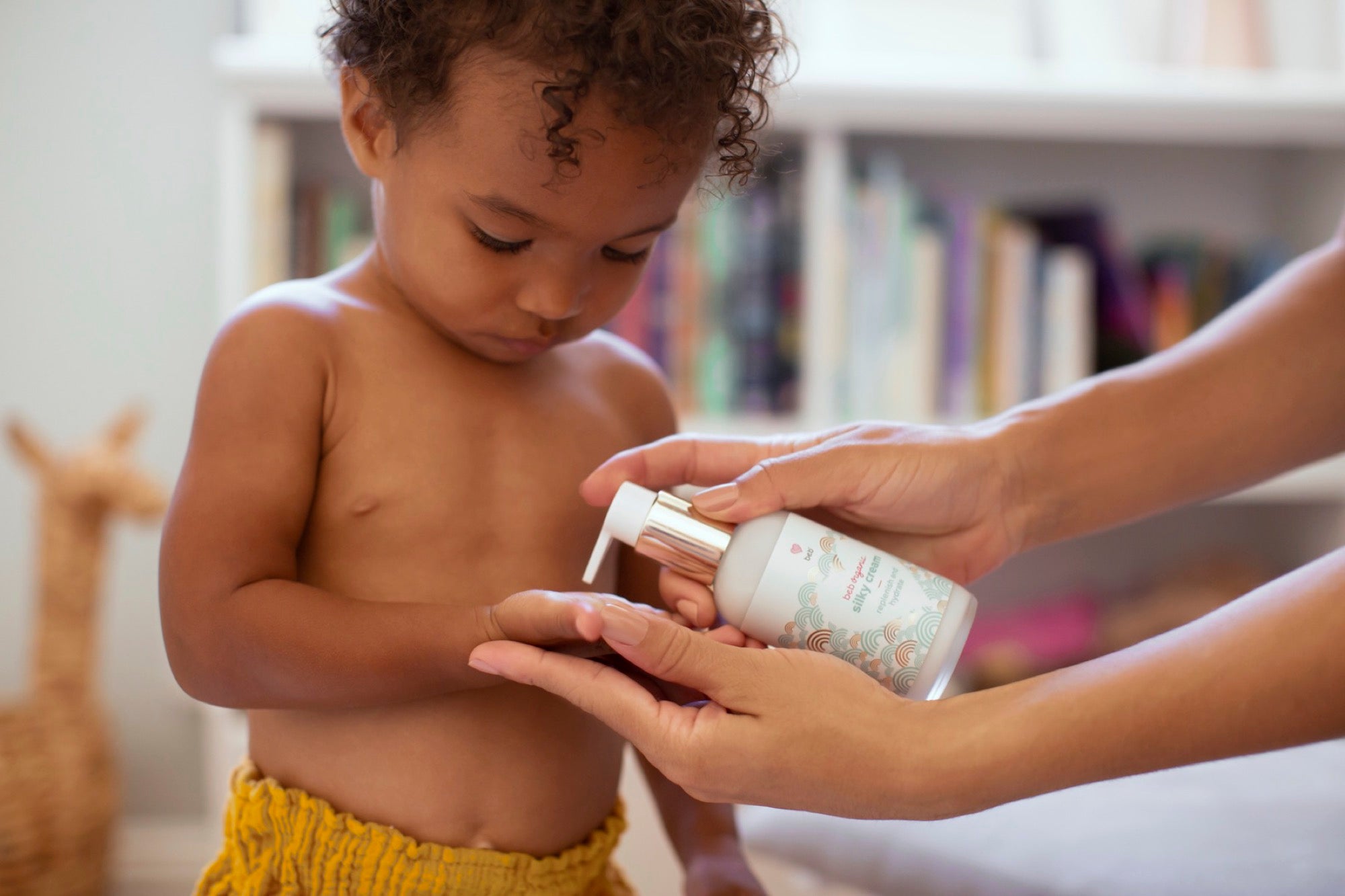
Baby Lotion for Dry Skin: Why One Step Isn’t Enough
Who it's for: dry, eczema-prone skin between flares, kept daily.
The routine, led by Silky Cream
Silky Cream is the Hydrate step and the one you repeat most: a fragrance-free cream that melts in at the warmth of your hands and helps skin feel moisturized. Bubbly Wash cleanses, Soothing Serum is the everyday Soothe step, and Nurturing Oil seals the cream in, all formulated for the most fragile skin and kept alongside your clinician's plan.


Questions parents ask
What does baby eczema look like?
Baby eczema shows up as dry, rough, red or darker patches that itch, most often on the cheeks and scalp in the early months and in the creases of elbows and knees as a child grows. On deeper skin tones the patches can look brown, purple or gray, and the redness is harder to see. It comes and goes, and a clinician confirms the diagnosis.
How often should I moisturize eczema-prone skin?
At least once a day, and within a few minutes of the bath while skin is still damp, is the floor clinicians set for eczema-prone skin. Twice a day or more during dry weather and flares is common. More applications of the same product usually help more than a switch to a heavier one.
Does moisturizing prevent eczema?
Daily moisturizing has not been shown to prevent eczema. Two large trials in newborns found no difference in eczema rates between babies moisturized daily from birth and babies who were not. Moisturizing remains the foundation of daily care for skin that already tends to be dry or eczema-prone.
Are steroid creams safe for babies with eczema?
Topical steroid creams are a standard part of eczema care for babies when a clinician prescribes them, used in the strength and for the length of time they set. Moisturizing continues alongside and after the steroid, because the steroid settles inflammation and the moisturizer does the daily barrier work. The decision to use one belongs with your pediatrician or dermatologist.
Is newborn skin peeling the same as dry skin?
Peeling and flaking in the first one to three weeks is normal newborn skin adjusting to air after months in fluid, and it needs no product. It passes by itself. Dry skin that persists past the newborn weeks, or skin that is rough and dull, is the kind that daily hydrating and sealing helps.
Why is baby skin so easily dried out?
Baby skin is often called sensitive; it is fragile, thinner and still building its barrier, so it loses water faster than adult skin. That is why dryness is the resting tendency and why a routine of hydrate then seal, kept daily, suits it. Fewer ingredients and no fragrance keep the variables down.